

18:特定的自适应主机防御
- Page ID
- 200158

\( \newcommand{\vecs}[1]{\overset { \scriptstyle \rightharpoonup} {\mathbf{#1}} } \)
\( \newcommand{\vecd}[1]{\overset{-\!-\!\rightharpoonup}{\vphantom{a}\smash {#1}}} \)
\( \newcommand{\dsum}{\displaystyle\sum\limits} \)
\( \newcommand{\dint}{\displaystyle\int\limits} \)
\( \newcommand{\dlim}{\displaystyle\lim\limits} \)
\( \newcommand{\id}{\mathrm{id}}\) \( \newcommand{\Span}{\mathrm{span}}\)
( \newcommand{\kernel}{\mathrm{null}\,}\) \( \newcommand{\range}{\mathrm{range}\,}\)
\( \newcommand{\RealPart}{\mathrm{Re}}\) \( \newcommand{\ImaginaryPart}{\mathrm{Im}}\)
\( \newcommand{\Argument}{\mathrm{Arg}}\) \( \newcommand{\norm}[1]{\| #1 \|}\)
\( \newcommand{\inner}[2]{\langle #1, #2 \rangle}\)
\( \newcommand{\Span}{\mathrm{span}}\)
\( \newcommand{\id}{\mathrm{id}}\)
\( \newcommand{\Span}{\mathrm{span}}\)
\( \newcommand{\kernel}{\mathrm{null}\,}\)
\( \newcommand{\range}{\mathrm{range}\,}\)
\( \newcommand{\RealPart}{\mathrm{Re}}\)
\( \newcommand{\ImaginaryPart}{\mathrm{Im}}\)
\( \newcommand{\Argument}{\mathrm{Arg}}\)
\( \newcommand{\norm}[1]{\| #1 \|}\)
\( \newcommand{\inner}[2]{\langle #1, #2 \rangle}\)
\( \newcommand{\Span}{\mathrm{span}}\) \( \newcommand{\AA}{\unicode[.8,0]{x212B}}\)
\( \newcommand{\vectorA}[1]{\vec{#1}} % arrow\)
\( \newcommand{\vectorAt}[1]{\vec{\text{#1}}} % arrow\)
\( \newcommand{\vectorB}[1]{\overset { \scriptstyle \rightharpoonup} {\mathbf{#1}} } \)
\( \newcommand{\vectorC}[1]{\textbf{#1}} \)
\( \newcommand{\vectorD}[1]{\overrightarrow{#1}} \)
\( \newcommand{\vectorDt}[1]{\overrightarrow{\text{#1}}} \)
\( \newcommand{\vectE}[1]{\overset{-\!-\!\rightharpoonup}{\vphantom{a}\smash{\mathbf {#1}}}} \)
\( \newcommand{\vecs}[1]{\overset { \scriptstyle \rightharpoonup} {\mathbf{#1}} } \)
\(\newcommand{\longvect}{\overrightarrow}\)
\( \newcommand{\vecd}[1]{\overset{-\!-\!\rightharpoonup}{\vphantom{a}\smash {#1}}} \)
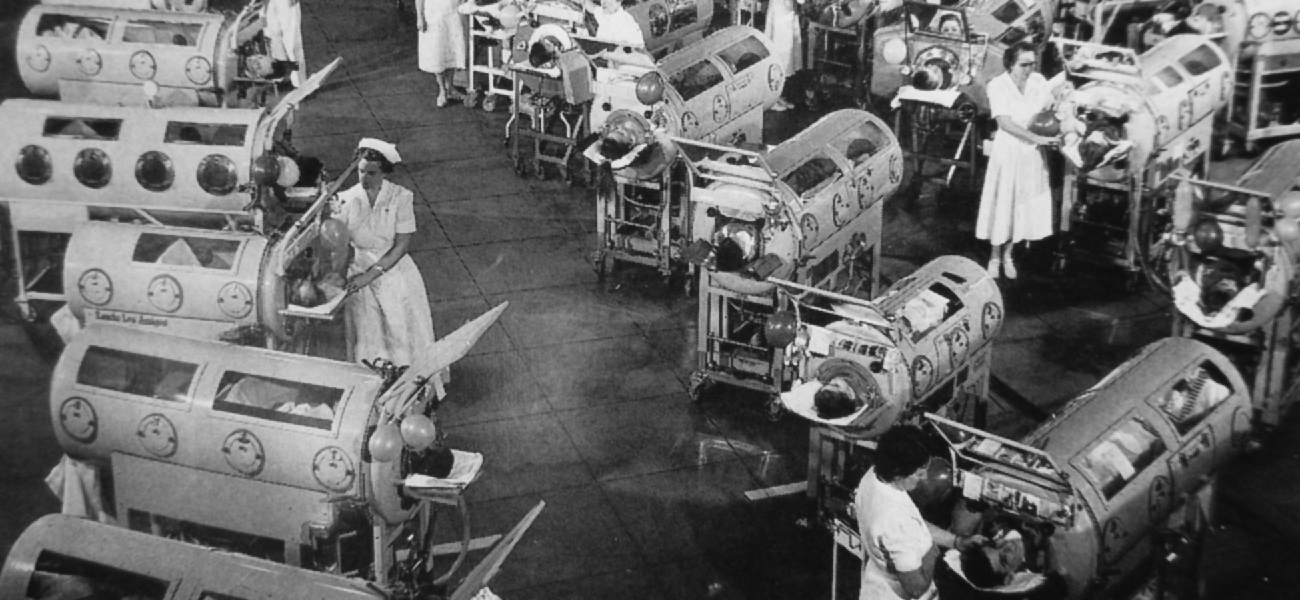
\(\newcommand{\avec}{\mathbf a}\) \(\newcommand{\bvec}{\mathbf b}\) \(\newcommand{\cvec}{\mathbf c}\) \(\newcommand{\dvec}{\mathbf d}\) \(\newcommand{\dtil}{\widetilde{\mathbf d}}\) \(\newcommand{\evec}{\mathbf e}\) \(\newcommand{\fvec}{\mathbf f}\) \(\newcommand{\nvec}{\mathbf n}\) \(\newcommand{\pvec}{\mathbf p}\) \(\newcommand{\qvec}{\mathbf q}\) \(\newcommand{\svec}{\mathbf s}\) \(\newcommand{\tvec}{\mathbf t}\) \(\newcommand{\uvec}{\mathbf u}\) \(\newcommand{\vvec}{\mathbf v}\) \(\newcommand{\wvec}{\mathbf w}\) \(\newcommand{\xvec}{\mathbf x}\) \(\newcommand{\yvec}{\mathbf y}\) \(\newcommand{\zvec}{\mathbf z}\) \(\newcommand{\rvec}{\mathbf r}\) \(\newcommand{\mvec}{\mathbf m}\) \(\newcommand{\zerovec}{\mathbf 0}\) \(\newcommand{\onevec}{\mathbf 1}\) \(\newcommand{\real}{\mathbb R}\) \(\newcommand{\twovec}[2]{\left[\begin{array}{r}#1 \\ #2 \end{array}\right]}\) \(\newcommand{\ctwovec}[2]{\left[\begin{array}{c}#1 \\ #2 \end{array}\right]}\) \(\newcommand{\threevec}[3]{\left[\begin{array}{r}#1 \\ #2 \\ #3 \end{array}\right]}\) \(\newcommand{\cthreevec}[3]{\left[\begin{array}{c}#1 \\ #2 \\ #3 \end{array}\right]}\) \(\newcommand{\fourvec}[4]{\left[\begin{array}{r}#1 \\ #2 \\ #3 \\ #4 \end{array}\right]}\) \(\newcommand{\cfourvec}[4]{\left[\begin{array}{c}#1 \\ #2 \\ #3 \\ #4 \end{array}\right]}\) \(\newcommand{\fivevec}[5]{\left[\begin{array}{r}#1 \\ #2 \\ #3 \\ #4 \\ #5 \\ \end{array}\right]}\) \(\newcommand{\cfivevec}[5]{\left[\begin{array}{c}#1 \\ #2 \\ #3 \\ #4 \\ #5 \\ \end{array}\right]}\) \(\newcommand{\mattwo}[4]{\left[\begin{array}{rr}#1 \amp #2 \\ #3 \amp #4 \\ \end{array}\right]}\) \(\newcommand{\laspan}[1]{\text{Span}\{#1\}}\) \(\newcommand{\bcal}{\cal B}\) \(\newcommand{\ccal}{\cal C}\) \(\newcommand{\scal}{\cal S}\) \(\newcommand{\wcal}{\cal W}\) \(\newcommand{\ecal}{\cal E}\) \(\newcommand{\coords}[2]{\left\{#1\right\}_{#2}}\) \(\newcommand{\gray}[1]{\color{gray}{#1}}\) \(\newcommand{\lgray}[1]{\color{lightgray}{#1}}\) \(\newcommand{\rank}{\operatorname{rank}}\) \(\newcommand{\row}{\text{Row}}\) \(\newcommand{\col}{\text{Col}}\) \(\renewcommand{\row}{\text{Row}}\) \(\newcommand{\nul}{\text{Nul}}\) \(\newcommand{\var}{\text{Var}}\) \(\newcommand{\corr}{\text{corr}}\) \(\newcommand{\len}[1]{\left|#1\right|}\) \(\newcommand{\bbar}{\overline{\bvec}}\) \(\newcommand{\bhat}{\widehat{\bvec}}\) \(\newcommand{\bperp}{\bvec^\perp}\) \(\newcommand{\xhat}{\widehat{\xvec}}\) \(\newcommand{\vhat}{\widehat{\vvec}}\) \(\newcommand{\uhat}{\widehat{\uvec}}\) \(\newcommand{\what}{\widehat{\wvec}}\) \(\newcommand{\Sighat}{\widehat{\Sigma}}\) \(\newcommand{\lt}{<}\) \(\newcommand{\gt}{>}\) \(\newcommand{\amp}{&}\) \(\definecolor{fillinmathshade}{gray}{0.9}\)生活在发达国家、出生于1960年代或更晚的人可能难以理解毁灭性传染病曾经的沉重负担。 例如,天花是一种致命的病毒性疾病,曾经摧毁了整个文明,但后来被消灭了。 由于包括世界卫生组织、国际扶轮社和联合国儿童基金会(UNICEF)在内的多个团体的疫苗接种努力,自1977年以来,患者从未被诊断出患有天花。 脊髓灰质炎是另一个很好的例子。 这种严重的病毒性疾病使患者瘫痪,直到20世纪50年代,他们经常在 “铁肺病房” 中存活(图\(\PageIndex{1}\))。 今天,脊髓灰质炎疫苗几乎根除了这种疾病。 疫苗还降低了曾经很常见的传染病的发病率,例如水痘、德国麻疹、麻疹、腮腺炎和百日咳。 这些疫苗和其他疫苗的成功归功于非常特异和适应性强的宿主防御能力,这是本章的重点。
先天非特异性宿主防御描述了对微生物病原体的先天免疫力。 高等动物,例如人类,还具有适应性免疫防御能力,这种防御对单个微生物病原体具有很高的特异性。 这种特定的适应性免疫是通过主动感染或疫苗接种获得的,是抵御逃避先天免疫防御的病原体的重要防御措施。
- 18.1: 免疫系统的架构
- 适应性免疫由两个重要特征定义:特异性和记忆力。 特异性是指适应性免疫系统靶向特定病原体的能力,记忆力是指其对先前接触过的病原体做出快速反应的能力。 例如,当一个人从水痘中恢复过来时,人体会对感染产生记忆,这可以特别保护其在以后再次接触病毒时免受病原体的侵害。
- 18.2:抗原、抗原呈递细胞和主要组织相容性复合物
- 主要组织相容性复合物(MHC)分子在健康细胞表面表达,将其识别为正常细胞和 “自身” 于自然杀伤(NK)细胞。 MHC分子在外来抗原的呈现中也起着重要作用,这是激活T细胞的关键步骤,因此也是适应性免疫系统的重要机制。
- 18.3: T 淋巴细胞
- 参与体液免疫的抗体通常在病原体和毒素附着和侵入宿主细胞之前将其结合。 因此,体液免疫主要涉及对抗细胞外空间中的病原体。 但是,已经进入宿主细胞的病原体在很大程度上受到保护,免受体液抗体介导的防御的影响。 另一方面,细胞免疫通过T淋巴细胞或T细胞的作用靶向和消除细胞内病原体。
- 18.4: B 淋巴细胞和抗体
- 体液免疫是指由B淋巴细胞或B细胞分泌的抗体介导的适应性免疫防御机制。 本节将重点介绍 B 细胞,讨论它们的产生和成熟、受体和激活机制。
- 18.5:疫苗
- 通过人工刺激适应性免疫防御,疫苗触发记忆细胞的产生,类似于初级反应期间产生的记忆细胞。 这样,患者能够在接触病原体后产生强烈的继发反应,但不必首先遭受初次感染。 在本节中,我们将探讨几种不同类型的人工免疫以及各种类型的疫苗及其诱导人工免疫的机制。
缩略图:从左至右:红细胞、血小板和淋巴细胞。 (公共领域;弗雷德里克国家癌症研究所)。